Using Data to Reimagine Content's Role in Growth
The Challenge
At ACT, content was everywhere.
We had emails, landing pages, articles, campaigns, social posts, and web experiences all designed to support student registration and organizational growth. But despite the volume of content being produced, we had never stopped to ask a fundamental question:
What is actually driving business and impact?
Like many organizations, we had inherited a content operation built around habit. Resources were allocated based on historical practices rather than audience behavior. Teams were busy, content was being produced, and everyone assumed the existing model was working.
The data told a different story.
The Insight
As we began analyzing performance, a surprising pattern emerged.
A single strategic landing page generated more revenue than all registration email campaigns combined during the same period.
Email production consumed 55% of content resources while contributing only 8% of revenue.
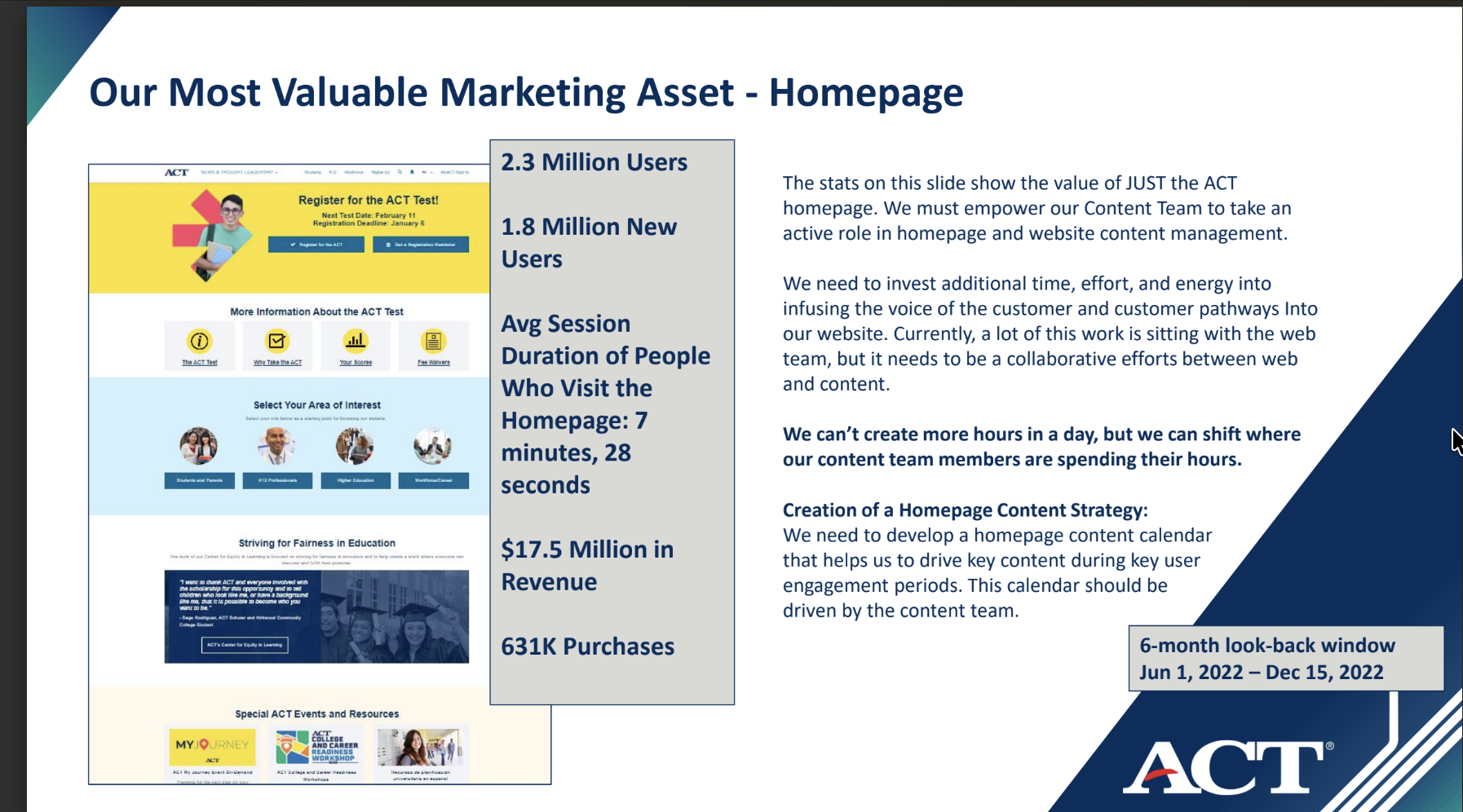
Meanwhile, owned digital properties such as the homepage, organic content, and key landing pages were driving millions in attributed revenue and influencing customer behavior at scale - yet no one was paying attention to the content on these pages!
The problem wasn't content quality.
The problem was that we were investing resources based on organizational assumptions instead of audience behavior.
What I Led
I led a content transformation initiative designed to reposition content from a support function to a growth function.
The work included:
Building a six-month cross-channel editorial roadmap tied to audience needs and business objectives
Creating content briefs and governance structures that improved alignment and reduced unnecessary meetings
Establishing a content lifecycle framework focused on planning, optimization, and measurement
Advocating for investment in SEO, organic content, and owned digital channels with a focus on using SEO to drive content versus as an afterthought
Reallocating resources toward the content experiences that generated the greatest business impact
Most importantly, we changed the conversation.
Instead of asking:
"How much content are we producing?"
We started asking:
"What content is creating value?"
Key Takeaway
The biggest lesson wasn't about content.
It was about strategy.
We discovered that content wasn't supporting the business.
Content was the business.
The organizations that win are not the ones producing the most content. They're the ones investing in the content experiences that create the most value for their audiences.