From Control to Capacity: What Motherhood Taught Me About Leadership
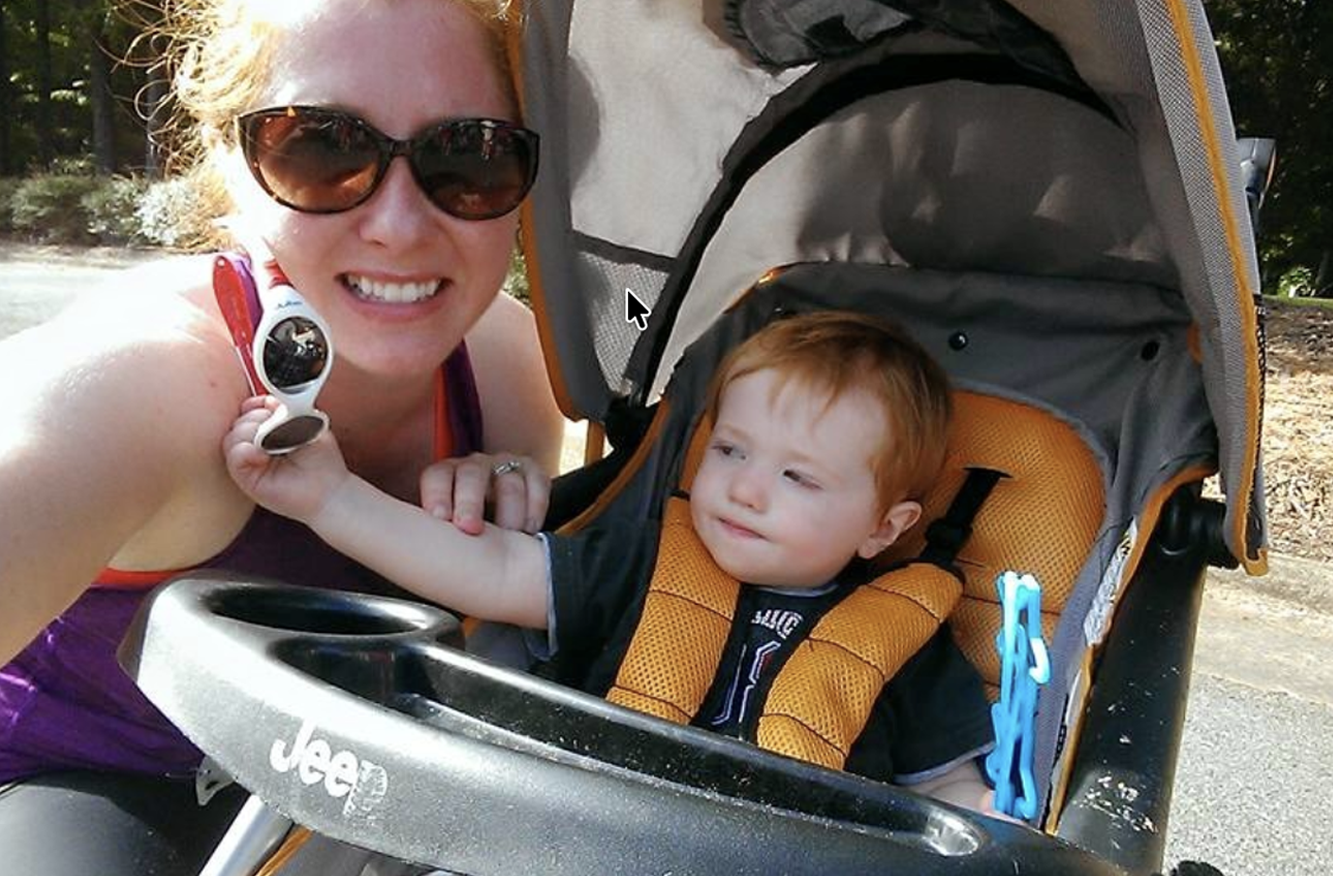
Before I Became a Mother, I Thought Preparation Meant Control
Before I became a mother, I believed preparation meant control. I thought that if I could anticipate enough, plan thoroughly enough, and mentally rehearse enough possible outcomes, I could shape uncertainty into something manageable. Preparation, in my mind, was about reducing risk through foresight. If I could imagine enough scenarios, I could prevent being caught off guard by any one of them.
When I was pregnant with my first son, and in the years that followed, I was a runner. Running was not just exercise for me; it was a form of discipline and clarity. It was how I organized my thoughts and how I built a sense of control over my body and my environment. I ran through my entire pregnancy, convinced that if labor was a marathon, I would be ready for it. I trained for endurance and pacing, for steadiness over time, for the kind of mental discipline that long-distance running demands. I equated preparation with the ability to sustain effort predictably and consistently.
But labor was not a marathon.
It was fast, intense, and deeply complicated in ways I had not anticipated or prepared for. It did not follow a rhythm I could manage or a pace I could control. There was no ability to settle into strategy or predict the next mile. Instead, it required something entirely different from me—something instinctive, immediate, and deeply human. It required presence without preparation in the way I had understood it.
And yet, despite the intensity and unpredictability of that experience, I didn’t fall apart.
Not because I had trained for that exact moment, but because I had built capacity long before I ever needed it. I had unknowingly been preparing in a way that had nothing to do with control and everything to do with resilience. I had learned how to breathe through discomfort rather than resist it. I had practiced staying grounded when conditions changed quickly and without warning. I had learned to trust myself when the plan disappeared entirely and there was nothing left to rely on except internal steadiness.
That experience became a turning point for me, not just in how I understood birth or motherhood, but in how I understood life itself.
The Shift From Control to Capacity
Motherhood has a way of reshaping your relationship with certainty. It teaches you, sometimes gently and other times abruptly, that so much of life is not about controlling the moment but about building the internal strength to meet it when it arrives. That shift is subtle at first, but over time it becomes foundational. You begin to realize that preparation is not about scripting outcomes but about developing the capacity to remain steady when the script no longer applies.
As mothers and as leaders, this is the work we are engaged in constantly, whether we name it or not. We adapt to shifting conditions in real time. We regulate not just our own emotional responses but often the emotional tone of the environments we are in. We interpret what is not being said while responding to what is. We steady others while learning, often quietly and imperfectly, how to steady ourselves.
There is a kind of invisible labor in this that is rarely acknowledged. It is the constant translation between external demands and internal equilibrium. It is the ongoing effort to stay present in roles that rarely pause and rarely simplify.
And this is where motherhood, parenthood, and leadership intersect most honestly. Not in perfection, and not in control, but in capacity under pressure.
You cannot train for everything that life will ask of you. There will always be moments that arrive faster than you can prepare for, circumstances that shift without warning, and responsibilities that require more of you than you feel ready to give. But what you can do is build the ability to sustain through those moments without losing yourself in them.
What Real Preparation Actually Looks Like
Over time, I’ve come to understand that real preparation is not about eliminating uncertainty but about expanding your ability to move through it. It is about strengthening your internal foundation so that when external conditions shift, you are not destabilized by the change. Instead, you are able to remain present, responsive, and anchored in yourself.
This means learning how to endure uncertainty without shutting down. It means staying open even when things accelerate beyond your control. It means leading with humanness even when exhaustion is present and clarity is not. It means continuing to show up, not because everything is aligned, but because you have developed the capacity to do so even when it is not.
At some point, most of us stop needing more information and start needing deeper access to what we already carry within us. We do not need to become more capable in the abstract sense. We need to become more connected to the capacity that already exists inside us.
This is a quieter form of strength, but it is also a more sustainable one. It does not rely on constant optimization or external validation. It relies on trust in one’s own ability to remain grounded through complexity.
Capacity in Leadership and Teams
I see this same truth reflected in leadership and organizational life. The strongest teams are not defined by how quickly they respond to disruption or how efficiently they operate under pressure alone. They are defined by how well they have prepared for pressure before it arrives.
Healthy teams build trust before urgency demands it. They invest in clarity before complexity makes it necessary. They develop resilience not as a reaction to stress but as a foundational operating principle. They create environments where steadiness is not dependent on any one individual but is embedded in the way the system functions.
In these environments, capacity becomes a shared resource. It is not carried by one person alone but distributed across relationships, processes, and culture. And when capacity is present at that level, organizations are not defined by constant urgency. They are defined by their ability to move through complexity without fragmentation.
This is one of the most important shifts in modern leadership: moving from performance under pressure to sustainability through capacity. It changes how we think about success, not as constant acceleration, but as the ability to remain effective without depletion.
A Different Definition of Strength
We often misunderstand strength as speed, efficiency, or control under pressure. But I have come to believe that real strength is something quieter and far more enduring. It is the ability to remain connected to yourself when circumstances are unclear. It is the capacity to respond rather than react. It is the willingness to stay present even when certainty is not available.
Strength is not measured by how much you can manage when things are stable. It is revealed in how you move through what is unstable without losing your center.
And perhaps most importantly, strength is not something you perform. It is something you build over time through lived experience, reflection, and repetition. It is developed in the moments when you realize you are still standing, even when nothing went according to plan.
This Mother’s Day
This Mother’s Day, I find myself thinking about all the women who are living this reality in ways that are often unseen. Women who are building capacity every day through exhaustion, uncertainty, responsibility, and care. Women who are holding families, teams, communities, and organizations together in ways that rarely get fully acknowledged.
There is a quiet form of leadership in that kind of endurance. It is not always visible, and it is not always named, but it is deeply felt by everyone who benefits from it.
Happy Mother’s Day to the women who are doing this work every day — in leadership, in caregiving, in systems, and in life. The ones building strength not through control, but through capacity, presence, and persistence. 🤍
